|
Getting your Trinity Audio player ready...
|
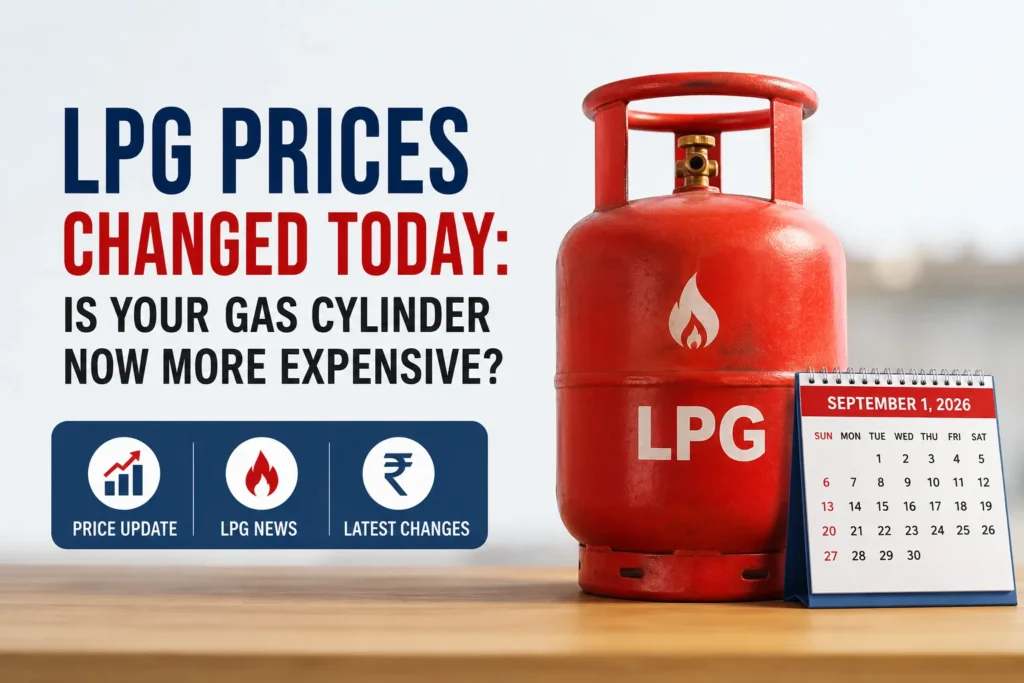
LPG Price Update: The start of a new month has brought another LPG price revision, leaving many consumers asking one important question: Has the gas cylinder used in homes become more expensive today?
The short answer is: not necessarily for domestic consumers.
The latest revision has primarily affected commercial LPG cylinders, while domestic household LPG cylinder prices have remained unchanged in several major markets. This means restaurants, hotels, catering businesses and other commercial users may see higher costs, but the impact on the standard cooking gas cylinder used in homes is different.
Here is a detailed look at what changed from September 1, who is paying more, and what LPG customers need to know.
What Changed in LPG Prices Today?
Oil marketing companies revise certain fuel prices periodically, and the beginning of a new month is often an important date for LPG price updates.
From September 1, the price of commercial LPG cylinders has increased after previous price reductions. The increase varies depending on the city and the cylinder category.
However, consumers should not confuse commercial LPG with the standard cylinder used for household cooking.
The key difference is:
- Domestic LPG cylinder: Used by households for cooking
- Commercial LPG cylinder: Used by restaurants, hotels, catering businesses and other commercial establishments
The latest price revision has had a greater impact on the commercial category.
Are Domestic LPG Cylinder Prices Higher Today?
For many household consumers, the answer is no major change in the domestic LPG cylinder price has been reported in the latest monthly revision.
This is important because headlines about an “LPG price hike” can create the impression that every household gas cylinder has become more expensive.
That is not always the case.
Consumers should therefore check whether a reported price increase applies to:
- A 14.2 kg domestic cooking gas cylinder, or
- A 19 kg commercial LPG cylinder.
The two categories have different prices and may be revised differently.
Why Are Commercial LPG Prices Increasing?
Commercial LPG prices can change due to several factors affecting energy markets and the cost of supplying LPG.
These factors may include:
- International energy prices
- Import costs
- Currency movements
- Transportation and distribution expenses
- Global supply conditions
- Changes in energy demand
Businesses that depend heavily on commercial LPG may therefore face an increase in operating costs when commercial cylinder prices rise.
Will Restaurant and Food Prices Increase?
A higher commercial LPG price does not automatically mean that restaurant prices will increase immediately.
However, LPG is an important operating expense for businesses such as:
- Restaurants
- Hotels
- Cafes
- Catering companies
- Food stalls
- Bakeries
- Commercial kitchens
If fuel costs continue to rise over a longer period, some businesses may eventually adjust their prices to manage higher expenses.
For now, the actual impact will depend on how much commercial LPG costs increase and how individual businesses respond.
What About the 14.2 kg Household Gas Cylinder?
The 14.2 kg LPG cylinder is the standard domestic cooking gas cylinder used by millions of households.
The important takeaway from the September 1 update is that consumers should not assume that a commercial LPG price hike means their household cylinder has also become more expensive.
Domestic LPG prices vary from one city to another because of local taxes and other pricing factors.
Before booking a refill, customers should check the latest price applicable to their own city and distributor.
LPG Price Update: Why Prices Differ Between Cities
LPG prices are not always identical across India.
The final consumer price can vary between cities due to factors such as:
- State and local taxes
- Transportation costs
- Distribution expenses
- Local pricing structures
As a result, a cylinder price in Delhi may differ from the price paid by a consumer in Mumbai, Ahmedabad, Chennai or Kolkata.
Customers should always check the latest rate for their specific location rather than relying only on a national headline.
LPG E-KYC: What Customers Should Know
Apart from price changes, LPG customers have also been paying close attention to verification and e-KYC requirements.
The purpose of customer verification is generally to ensure that LPG connections and subsidy-related benefits are linked to genuine and eligible consumers.
However, customers should be careful about viral messages claiming that every LPG connection will immediately stop working after a particular date.
The exact requirements can depend on factors such as:
- The type of LPG connection
- Whether the customer receives government benefits or subsidies
- The customer’s verification status
- Instructions issued by the relevant LPG distributor
The safest option is to contact your LPG distributor or use the official customer service platform associated with your connection to confirm whether any action is required.
Will You Be Unable to Book a Gas Cylinder Without E-KYC?
Customers should avoid relying on social media forwards or unverified messages regarding LPG booking restrictions.
If you receive a message claiming that your connection will be blocked, cancelled or unable to book a refill without immediate verification, confirm the information directly with your distributor.
Do not share:
- OTPs
- Aadhaar details
- Bank information
- Login credentials
with unknown callers or unofficial websites claiming to complete LPG verification.
Commercial vs Domestic LPG: Know the Difference
Understanding the type of cylinder is important when reading LPG price news.
| LPG Type | Common Use |
| Domestic LPG Cylinder | Household cooking |
| Commercial LPG Cylinder | Restaurants, hotels and businesses |
| Small LPG Cylinders | Limited household or commercial use depending on category |
A price revision in one category does not automatically mean that all LPG cylinders have received the same increase or decrease.
How Often Do LPG Prices Change?
LPG prices are reviewed periodically, and consumers often see important price updates at the beginning of a new month.
However, the direction of the change is not always the same.
Prices may:
- Increase
- Decrease
- Remain unchanged
Different LPG categories can also experience different revisions.
For this reason, consumers should check the latest applicable rate instead of assuming that last month’s price is still valid.
How to Check the Latest LPG Cylinder Price
Before booking your next refill, check the latest price through your official LPG provider or authorised distributor.
You should verify:
- Your city
- Cylinder type
- Domestic or commercial category
- Applicable delivery charges, if any
This is especially useful when news reports mention a price hike but do not clearly distinguish between household and commercial cylinders.
What Should LPG Consumers Do Today?
If you use LPG at home, there is no need to panic because of a headline announcing a general “LPG price hike.”
Instead, follow these simple steps:
1. Check Your Cylinder Category
Confirm whether you use a domestic household cylinder or another LPG category.
2. Check Your City’s Current Rate
Prices can vary by location.
3. Verify E-KYC Messages
Do not rely on forwarded messages. Confirm any verification requirement through official channels.
4. Keep Your Registered Mobile Number Updated
Your LPG distributor may use your registered number to send important booking, delivery or verification information.
5. Watch for Monthly Price Revisions
Fuel prices can change periodically, so checking the latest rate before booking is always useful.
LPG Prices Today: Key Takeaways
Here are the most important points from the September 1 LPG update:
- Commercial LPG cylinder prices have seen an increase.
- Domestic household LPG prices have not necessarily increased along with commercial rates.
- Consumers should distinguish between 14.2 kg domestic cylinders and 19 kg commercial cylinders.
- LPG prices can vary from city to city.
- E-KYC and verification requirements should be confirmed directly with authorised LPG service channels.
- Customers should ignore unverified claims that every LPG connection will automatically stop working.
- Businesses using commercial LPG may face higher operating costs following a price increase.
Frequently Asked Questions
1. Did LPG prices increase today?
Commercial LPG cylinder prices have increased in the latest revision. However, this does not automatically mean that domestic household LPG cylinders have become more expensive.
2. Is the domestic gas cylinder more expensive now?
The answer depends on your city and the latest domestic LPG rate applicable there. Consumers should check the current price with their authorised distributor.
3. Why is commercial LPG becoming more expensive?
Commercial LPG prices can be influenced by international energy costs, import expenses, transportation and broader market conditions.
4. Will restaurant food become more expensive?
Not necessarily immediately. However, commercial LPG is an operating cost for restaurants and other food businesses, so sustained increases may eventually affect costs.
5. Do LPG prices remain the same across India?
No. Final prices can vary between cities because of taxes, transportation and other local factors.
6. Is LPG e-KYC required?
Verification requirements can depend on the type of customer and connection. Customers should confirm their individual status directly through authorised LPG service channels.
Final Word
The September 1 LPG update is important, but consumers should look beyond the headline.
A rise in commercial LPG prices does not automatically mean that every household cooking gas cylinder has become more expensive. Domestic and commercial cylinders are different categories, and their prices may move differently.
The best approach for consumers is to check the latest price for their own city, confirm their cylinder category and rely on official information for any e-KYC or booking-related requirement.