|
Getting your Trinity Audio player ready...
|
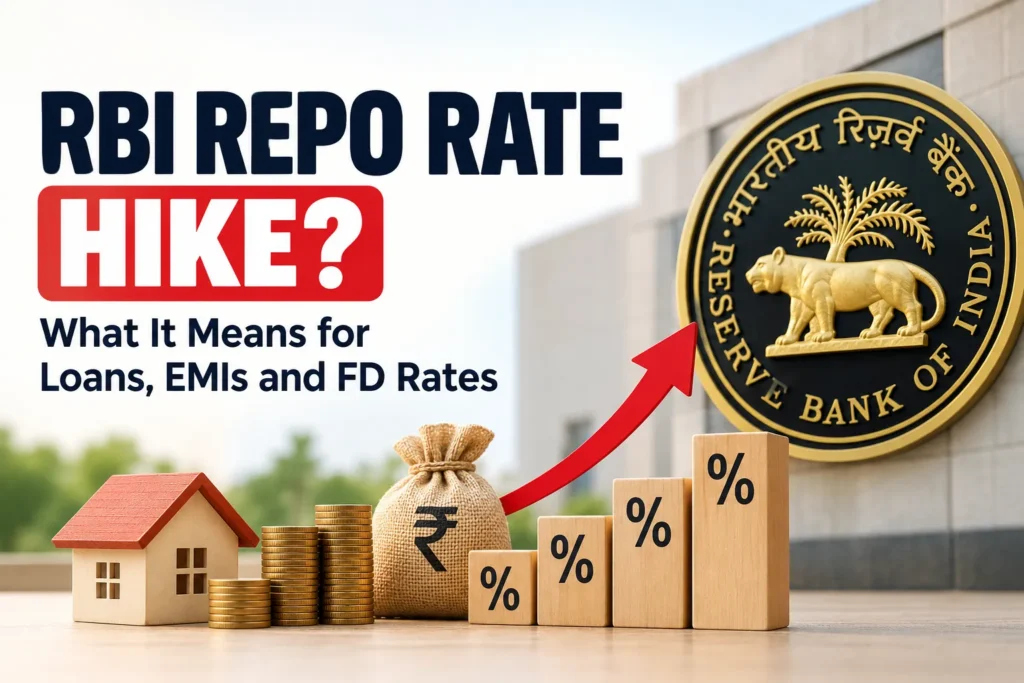
The Reserve Bank of India (RBI) has taken the spotlight with its October 2026 Monetary Policy Committee (MPC) meeting. The repo rate decision matters directly to borrowers, banks, investors and savers because it can influence lending rates, deposit rates and financial market conditions.
The RBI’s October MPC meeting took place from October 5 to October 7, 2026. The central bank’s policy decision comes at a time when inflation, crude oil prices and global financial conditions remain key concerns.
What Is the RBI Repo Rate?
The repo rate is the interest rate at which the Reserve Bank of India lends money to commercial banks against eligible securities.
When the RBI changes the repo rate, banks may adjust their lending and deposit rates depending on their funding costs, benchmarks and market conditions.
A higher repo rate generally increases the cost of borrowing across the financial system. A lower repo rate can support cheaper borrowing and stronger credit demand.
Why Is the RBI Repo Rate Important?
The RBI uses the policy repo rate as one of its key monetary policy tools.
The central bank aims to maintain price stability while keeping economic growth in mind. Changes in the policy rate can gradually affect:
- Home loan interest rates
- Personal and vehicle loans
- Business borrowing costs
- Fixed deposit rates
- Bond yields
- Bank credit growth
- Consumer spending and investment
However, the impact does not reach every borrower or saver immediately. Banks decide their lending and deposit rates based on several factors.
RBI Repo Rate Hike: What Could It Mean for Home Loan EMIs?
A repo rate increase can put upward pressure on floating-rate loans.
Home loan borrowers with floating interest rates should watch their lender’s response after the RBI policy decision. Depending on the loan’s benchmark and reset mechanism, the borrower could see a higher interest rate, a longer repayment period or a combination of both.
Borrowers should therefore check their latest loan interest rate and reset terms rather than assuming that the entire repo rate change will immediately appear in their EMI.
Will Fixed Deposit Rates Increase?
A repo rate hike can also influence bank deposit rates.
Banks may raise fixed deposit rates when they need to attract more deposits. However, the timing and size of any FD rate change depend on each bank’s funding requirements and overall market conditions.
Savers should therefore compare the latest FD rates before moving their money into a new deposit.
What Could Happen to Loan Interest Rates?
The effect will differ across loan categories.
Floating-rate home loans usually respond more directly to changes in policy-linked benchmarks. Personal loans, vehicle loans and business loans can also face changes depending on the lender and the applicable interest-rate structure.
Existing borrowers should check whether their loan uses an external benchmark, an internal benchmark or another pricing mechanism.
Why Is the October 2026 RBI MPC Meeting Important?
The October policy review comes after the RBI kept the repo rate unchanged at 5.25% at its August 2026 MPC meeting. The August resolution also retained the neutral policy stance.
The RBI’s latest decision therefore matters not only because of the rate itself but also because of the central bank’s assessment of inflation, growth and financial conditions.
Markets will closely watch the RBI’s comments on the future direction of monetary policy.
What Should Borrowers and Savers Do Now?
Borrowers should avoid making financial decisions based only on the headline repo rate.
If you have a floating-rate loan, check:
- Your current interest rate
- Your loan benchmark
- Your next reset date
- Your outstanding principal
- Your remaining loan tenure
FD investors should compare current deposit rates across banks and consider the tenure and withdrawal conditions before investing.
RBI Repo Rate: What to Watch Next
The next important signal will come from the RBI’s assessment of inflation and economic growth.
The central bank’s communication can give borrowers, banks and investors a clearer idea about the direction of interest rates in the coming policy meetings.
For consumers, the key takeaway remains simple: the RBI repo rate can influence borrowing and saving costs, but the actual impact depends on how banks transmit changes to their customers.
As the October 2026 MPC decision develops, borrowers and savers should focus not only on the repo rate but also on changes in bank lending rates, FD rates and the RBI’s forward policy guidance.