|
Getting your Trinity Audio player ready...
|
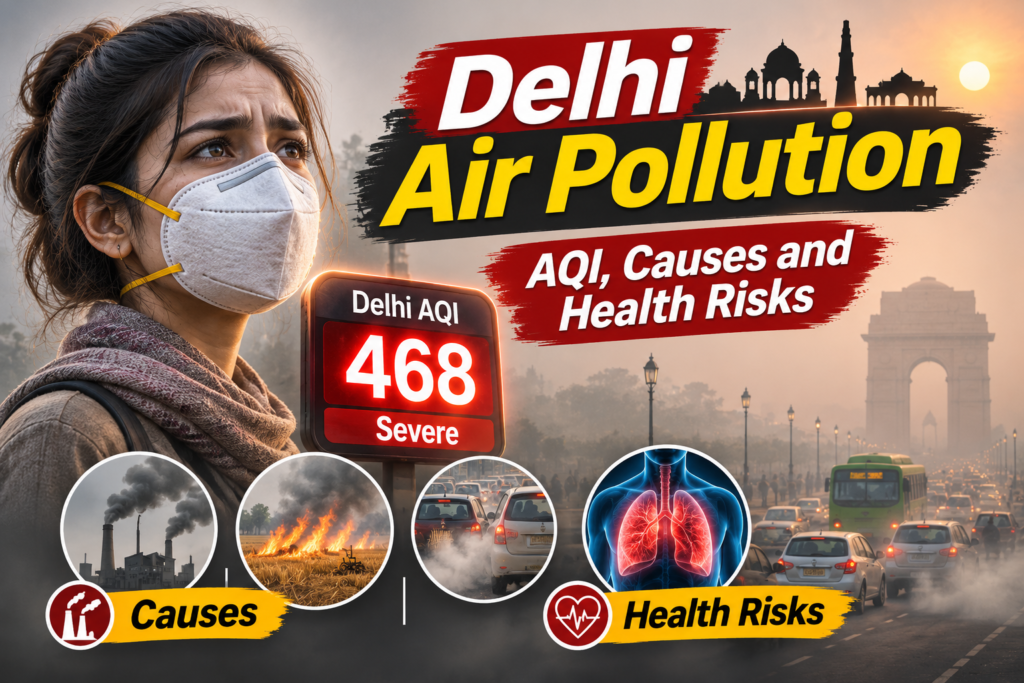
Delhi’s air pollution has once again become a major public health concern as winter approaches, with deteriorating air quality, rising particulate matter and persistent smog affecting several parts of the national capital. On November 21, 2026, Delhi recorded an overall Air Quality Index (AQI) of 279 at 7 AM, according to Central Pollution Control Board (CPCB) data reported by the Indian Express. Several monitoring stations, including AIIMS, Chandni Chowk, Wazirpur and Anand Vihar, recorded readings above 300, placing them in the very poor category.
The latest pollution episode has renewed concerns about the health risks of breathing polluted air, particularly for children, senior citizens, pregnant women and people with asthma or other respiratory conditions. Although the Commission for Air Quality Management (CAQM) revoked Graded Response Action Plan (GRAP) Stage III restrictions on November 17 after a temporary improvement in air quality, Stage I and Stage II measures remained in force.
Delhi’s winter pollution is not caused by a single factor. Vehicle emissions, industrial activities, construction dust, road dust, waste burning, agricultural residue burning in neighbouring states and unfavourable weather conditions collectively contribute to the problem.
As temperatures fall, low wind speeds and atmospheric temperature inversion prevent pollutants from dispersing effectively. This allows harmful particles, particularly PM2.5 and PM10, to accumulate closer to the ground, increasing the risk of respiratory and cardiovascular problems.
Understanding Delhi’s AQI levels, major pollution sources, health effects and preventive measures is essential for residents preparing for another challenging winter.
Delhi Air Pollution Latest Update: What Is the AQI on November 21, 2026?
Delhi’s air quality remained concerning on November 21, with several parts of the city experiencing poor to very poor pollution levels.
According to CPCB readings reported on Saturday morning, Delhi recorded an overall AQI of 279 at 7 AM. However, individual monitoring stations reported considerably higher pollution levels.
Some of the reported readings included:
| Monitoring Station | AQI | Air Quality Category |
|---|---|---|
| AIIMS | 369 | Very Poor |
| Chandni Chowk | 365 | Very Poor |
| Wazirpur | 332 | Very Poor |
| Anand Vihar | 327 | Very Poor |
| Delhi Overall | 279 | Poor |
These readings demonstrate that pollution levels can vary considerably between neighbourhoods. Areas experiencing heavy traffic, construction activity and industrial emissions may record higher pollution levels than locations with comparatively fewer emission sources.
The CAQM’s official air quality dashboard also reported a Delhi AQI of 276 at 3 AM on November 21, reflecting the poor air quality recorded during the early morning period.
The difference between readings reflects their respective reporting times and monitoring updates. AQI is not a fixed number and can change throughout the day depending on emissions, weather conditions and atmospheric movement.
What Is the Current GRAP Status in Delhi?
The Commission for Air Quality Management uses the Graded Response Action Plan to implement additional pollution-control measures when air quality deteriorates across Delhi-NCR.
On November 17, 2026, CAQM revoked GRAP Stage III restrictions after Delhi’s daily average AQI improved to 204. However, the commission retained Stage I and Stage II measures because forecasts indicated that air quality could remain in the poor or very poor categories.
The GRAP framework is divided into four stages under the revised schedule.
| GRAP Stage | AQI Range | Air Quality |
|---|---|---|
| Stage I | 201–300 | Poor |
| Stage II | 301–400 | Very Poor |
| Stage III | 401–450 | Severe |
| Stage IV | Above 450 | Severe+ |
Measures under these stages become increasingly strict as pollution levels rise.
Under Stage I and Stage II, authorities are expected to strengthen road cleaning, dust suppression, construction-site inspections and pollution-control enforcement. Residents are also encouraged to use public transport and reduce unnecessary private vehicle usage.
GRAP restrictions can change depending on the latest air quality readings and official CAQM orders. Therefore, residents should follow current government announcements rather than assume that restrictions remain unchanged throughout the winter.
What Are the Main Causes of Air Pollution in Delhi?
Delhi’s air pollution is the result of several interconnected sources. Although agricultural stubble burning receives considerable attention during October and November, official assessments show that local emissions and regional pollution both play important roles.
A February 2026 assessment considered by CAQM, based on source-apportionment studies conducted between 2015 and 2025, identified PM2.5 as the dominant pollutant affecting Delhi’s air quality. The assessment highlighted transport, industrial activity, power generation, biomass burning and secondary particulate formation as important contributors.
The major causes include the following.
1. Vehicle Emissions and Traffic Congestion
Vehicular pollution is one of Delhi’s major sources of urban air pollution. The national capital has a large number of private cars, two-wheelers, buses, taxis, trucks and commercial vehicles operating daily.
Vehicles release nitrogen oxides, carbon monoxide, hydrocarbons and particulate matter. Diesel-powered vehicles, particularly older commercial vehicles, can contribute significantly to harmful emissions.
Traffic congestion makes the situation worse because vehicles often remain stationary or move slowly for extended periods, increasing fuel consumption and emissions.
Areas around major roads, intersections, commercial centres and transport hubs can experience particularly high pollution levels.
2. Stubble Burning in Punjab and Haryana
Agricultural residue burning is another important seasonal contributor to air pollution across northern India.
After harvesting paddy crops, some farmers burn leftover agricultural residue to prepare fields for the next cultivation cycle. Smoke from these fires can travel across state boundaries and affect Delhi-NCR, depending on wind direction and atmospheric conditions.
The impact generally becomes more noticeable during October and November, when crop-residue burning coincides with the beginning of winter.
However, stubble burning should not be considered the only explanation for Delhi’s pollution. The city’s local emissions, industrial activities and meteorological conditions also play significant roles.
3. Construction and Demolition Activities
Rapid urban development, road expansion, infrastructure projects and building construction generate considerable amounts of dust.
Excavation, demolition, transportation of construction materials and uncovered building sites release particulate matter into the surrounding atmosphere.
PM10 is particularly associated with road and construction dust, although construction-related activities can also contribute to finer particles.
Poor dust-management practices, uncovered trucks, inadequate barriers and the absence of water sprinkling can increase pollution around construction sites.
4. Industrial Emissions and Power Generation
Industries operating in Delhi and neighbouring NCR areas contribute to regional air pollution through fuel combustion and industrial processes.
Factories, brick kilns, industrial boilers, diesel generators and other energy-producing equipment can release particulate matter, sulphur dioxide and nitrogen oxides.
These gases can also participate in atmospheric chemical reactions that create secondary particulate matter.
Industrial pollution is not limited to Delhi’s administrative boundaries. Emissions from surrounding industrial clusters can affect the wider NCR region.
5. Road Dust and Open Waste Burning
Dust from roads, vacant plots, unpaved surfaces and construction debris adds to Delhi’s particulate pollution.
Heavy traffic repeatedly lifts settled dust into the air, particularly when roads are dry and poorly maintained.
Open burning of household waste, dry leaves, plastic and other discarded materials creates additional harmful emissions. Landfill fires and uncontrolled waste disposal can also contribute to local pollution.
6. Firecrackers and Biomass Burning
Firecrackers can cause short-term increases in particulate matter and other pollutants, particularly during festivals and celebrations.
Similarly, burning wood, leaves, coal and other biomass for heating or cooking releases smoke and fine particles.
During winter, localised burning activities can worsen air quality in residential neighbourhoods, especially when atmospheric conditions prevent pollutants from dispersing.
Why Does Delhi’s Air Pollution Become Worse During Winter?
Delhi experiences pollution throughout the year, but the problem often becomes significantly worse between October and January.
The main reason is the combination of continuous emissions and unfavourable meteorological conditions.
According to the Commission for Air Quality Management’s assessment of winter pollution in Delhi-NCR, the seasonal pollution episode generally develops in two phases.
October to November: Agricultural residue burning in neighbouring states can contribute to regional pollution. At the same time, declining wind speeds and a lower atmospheric mixing height allow pollutants to accumulate.
December to January: Colder temperatures, calm winds, fog, reduced sunlight and shallow mixing layers make it increasingly difficult for pollutants to disperse.
Several weather-related factors explain this seasonal deterioration.
Temperature Inversion
Normally, air near the ground becomes warmer and rises, helping pollutants disperse into the atmosphere.
During a temperature inversion, a layer of warmer air sits above cooler air near the surface. This restricts vertical movement and traps pollution closer to where people breathe.
Temperature inversion is one of the important reasons winter pollution episodes can persist for several days.
Low Wind Speed
Wind helps carry pollutants away from their sources and distribute them across larger areas.
During winter, weaker winds reduce this natural ventilation. Consequently, vehicle emissions, industrial smoke and other pollutants can accumulate over the city.
Fog and High Humidity
Fog and humidity can influence the formation and persistence of particulate pollution.
Water vapour and atmospheric chemical reactions can contribute to the growth of aerosol particles. When fog, low wind speeds and existing emissions occur together, visibility and air quality can deteriorate.
Reduced Atmospheric Mixing Height
The atmospheric mixing height refers to the vertical layer within which pollutants can mix.
During winter, this layer often becomes shallower. As a result, the same quantity of emissions can become concentrated within a smaller volume of air.
This explains why Delhi can experience high pollution levels even without a sudden increase in the number of vehicles or industrial activities.
What Are PM2.5 and PM10, and Why Are They Dangerous?
PM2.5 and PM10 are two important categories of particulate matter measured by air quality monitoring stations.
Particulate matter refers to tiny solid particles and liquid droplets suspended in the air. Their size determines how deeply they can enter the human respiratory system.
PM2.5 – Fine Particulate Matter
2.5 µm
Maximum aerodynamic diameter
These extremely small particles can penetrate deep into the lungs and some components can enter the bloodstream.
PM10 – Coarse Particulate Matter
10 µm
Maximum aerodynamic diameter
These particles can enter the respiratory tract and are commonly associated with road dust, construction activity and other airborne material.
PM2.5 is particularly concerning because its small size allows it to reach the deeper parts of the lungs.
Prolonged exposure can increase the risk of respiratory diseases, worsen existing asthma and contribute to cardiovascular health problems.
PM10 can irritate the nose, throat and respiratory passages. People exposed to high concentrations may experience coughing, breathing discomfort and irritation.
Both pollutants are important indicators of air quality and public health risk.
Delhi AQI Levels: What Does Each Category Mean?
The Air Quality Index is a numerical system used to communicate the condition of ambient air and its potential health effects.
India’s National AQI system classifies air quality into six categories, ranging from Good to Severe.
| AQI Range | Category | Possible Health Impact |
|---|---|---|
| 0–50 | Good | Minimal health impact |
| 51–100 | Satisfactory | Minor discomfort to sensitive individuals |
| 101–200 | Moderate | Breathing discomfort among sensitive groups |
| 201–300 | Poor | Breathing discomfort on prolonged exposure |
| 301–400 | Very Poor | Increased risk of respiratory illness |
| 401–500 | Severe | Serious health effects, including among healthy people |
These categories are based on India’s National AQI framework developed by CPCB.
What Should You Do at Different AQI Levels?
- Good and Satisfactory: Normal outdoor activities can generally continue.
- Moderate: People with asthma and other respiratory conditions should limit prolonged outdoor exertion.
- Poor: Reduce strenuous outdoor activities and take additional precautions if you belong to a sensitive group.
- Very Poor: Avoid unnecessary outdoor exercise and minimise exposure, particularly during morning and evening hours.
- Severe: Avoid outdoor physical activities and follow health advisories issued by authorities.
AQI is a useful public indicator, but it does not mean that every person will experience identical health effects. Individual vulnerability, exposure duration and existing medical conditions also matter.
Health Risks of Delhi Air Pollution: Who Is Most at Risk?
Exposure to polluted air can affect different parts of the human body. The effects may appear immediately during severe pollution episodes or develop over several years of repeated exposure.
The World Health Organization identifies air pollution as a major environmental health risk associated with respiratory and cardiovascular diseases.
People living in heavily polluted urban environments may experience a greater health burden, particularly during prolonged winter pollution episodes.
1. Respiratory Problems
The respiratory system is directly exposed to polluted air.
Fine particles and harmful gases can irritate the respiratory tract and worsen existing breathing conditions.
Common symptoms include:
- Persistent coughing.
- Throat irritation.
- Wheezing and breathing difficulty.
- Chest discomfort.
- Increased asthma symptoms.
- Reduced exercise tolerance.
People with asthma, chronic obstructive pulmonary disease (COPD) and other respiratory conditions may experience more severe symptoms.
2. Increased Risk of Asthma Attacks
Air pollution can trigger asthma symptoms in people who already have the condition.
Exposure to particulate matter, nitrogen dioxide and other pollutants may increase airway inflammation and breathing difficulties.
Children with asthma may be particularly vulnerable because they spend time outdoors, have developing respiratory systems and breathe more air relative to their body weight than adults.
3. Heart and Cardiovascular Problems
Air pollution is not restricted to the lungs.
Long-term exposure to fine particulate matter is associated with cardiovascular problems, including an increased risk of heart disease and stroke.
Fine particles can contribute to inflammation and other biological changes that affect blood vessels and cardiovascular health.
People with existing heart conditions should be especially careful during severe pollution episodes.
4. Effects on Children
Children are among the most vulnerable groups during periods of poor air quality.
Their lungs and immune systems are still developing, and outdoor activities can increase their exposure to pollutants.
Repeated exposure to polluted air may affect respiratory health and lung development.
Parents should monitor AQI levels before allowing children to participate in outdoor sports, cycling, running or other strenuous activities.
5. Risks for Senior Citizens
Older adults may have reduced lung function or existing respiratory and cardiovascular conditions.
Polluted air can aggravate these conditions and increase breathing discomfort.
Senior citizens should avoid unnecessary outdoor exposure during very poor and severe pollution episodes.
6. Effects on Pregnant Women
Pregnant women should also take precautions during prolonged periods of poor air quality.
Research has associated exposure to air pollution during pregnancy with adverse pregnancy and birth outcomes. However, individual risks vary depending on exposure levels and other health factors.
Reducing avoidable exposure and following medical advice are important preventive steps.
How to Protect Yourself from Delhi Air Pollution: 12 Important Safety Tips
Completely avoiding air pollution in a major metropolitan city is difficult. However, residents can reduce their exposure by making practical changes to their daily routines.
The following precautions are particularly important during winter when pollution levels frequently enter the poor and very poor categories.
1. Check the AQI Before Leaving Home
Check the latest AQI readings before planning outdoor activities.
Do not depend only on the citywide average. Check the monitoring station closest to your residential area, workplace or school because pollution levels can differ significantly between neighbourhoods.
2. Wear a Properly Fitted N95 Mask
A properly fitted N95 or equivalent particulate respirator can help reduce exposure to airborne particles when used correctly.
Make sure the mask fits closely around your nose and mouth without noticeable gaps.
Ordinary cloth masks and loose-fitting surgical masks generally do not provide the same level of protection against fine particulate matter.
People with breathing or heart conditions who experience discomfort while wearing respirators should seek medical advice about suitable protection.
3. Avoid Outdoor Exercise During High Pollution
Morning walks and outdoor exercise are common activities in Delhi, particularly among senior citizens.
However, exercising in polluted air can increase the amount of pollution entering the lungs because breathing becomes deeper and faster during physical activity.
When AQI levels are poor or worse, consider indoor exercise instead of running, cycling or walking near busy roads.
4. Use an Air Purifier Indoors
An air purifier with a properly sized HEPA filter can help reduce airborne particles inside homes and offices.
Choose a purifier according to the room size and its Clean Air Delivery Rate (CADR).
Keep doors and windows closed during periods of severe outdoor pollution, while ensuring appropriate ventilation when outdoor air quality improves.
Remember that an air purifier does not remove every type of indoor pollutant. It also cannot replace pollution-control measures outside the home.
5. Keep Children Away from Heavy Traffic Areas
Children should avoid playing near busy roads, construction sites and other major pollution sources during high AQI periods.
Schools and parents should monitor official air quality advisories before arranging outdoor sports and physical activities.
6. Maintain Indoor Cleanliness
Dust can accumulate inside homes and contribute to indoor particulate exposure.
Use damp cloths or wet mopping rather than dry sweeping, which can resuspend dust into the air.
Avoid smoking indoors, burning waste and using unnecessary combustion-based heating equipment.
7. Keep Car Windows Closed During Heavy Traffic
People travelling by car should keep windows closed when driving through heavily polluted areas.
Using the vehicle’s recirculation setting can reduce the entry of outside air temporarily. However, recirculation should not be used continuously in every situation because adequate ventilation is also necessary.
Maintain the vehicle’s cabin air filter regularly.
8. Avoid Burning Wood, Leaves and Garbage
Burning household waste, dry leaves, plastic and other materials releases harmful pollutants.
Residents should avoid open burning and report repeated waste-burning activities to the relevant civic authorities.
9. Stay Hydrated
Drink sufficient water throughout the day to maintain normal hydration.
Water does not remove pollutants from the lungs or protect against the harmful effects of air pollution. However, maintaining hydration supports normal bodily functions.
10. Follow Prescribed Medication
People with asthma, COPD and other respiratory conditions should continue taking prescribed medication.
Keep prescribed inhalers and emergency medication accessible, particularly during severe pollution episodes.
Do not independently change medication doses because of worsening AQI.
11. Avoid Unnecessary Outdoor Exposure During Severe AQI
When AQI enters the severe category, avoid unnecessary outdoor activities.
If outdoor travel is essential, use a properly fitted particulate respirator and minimise time spent near traffic congestion, construction areas and other pollution sources.
12. Consult a Doctor When Symptoms Persist
Persistent coughing, wheezing, chest discomfort and breathing difficulties should not be ignored.
Seek medical attention if symptoms continue or become worse. Severe breathing difficulty, significant chest pain or sudden deterioration requires urgent medical assessment.
How Can Delhi Reduce Air Pollution?
Individual precautions can reduce personal exposure, but the long-term solution requires coordinated action from government agencies, industries, transport operators, businesses and residents.
Delhi’s pollution problem extends beyond administrative boundaries, making regional cooperation essential.
Strengthening Public Transportation
Expanding reliable public transportation can reduce dependence on private vehicles.
Improved metro connectivity, electric buses, better last-mile connectivity and safer walking and cycling infrastructure can encourage people to use cleaner transportation options.
Strict enforcement of vehicle emission standards and effective pollution checks are equally important.
Better Construction Dust Management
Construction companies and infrastructure developers must follow dust-control requirements.
Covering construction materials, installing appropriate barriers, using dust-suppression systems and maintaining clean roads around project sites can help control particulate emissions.
Authorities must also conduct regular inspections and take action against non-compliant construction sites.
Controlling Industrial Emissions
Industries across Delhi-NCR need to comply with emission standards and operate appropriate pollution-control equipment.
Regular monitoring of industrial emissions, cleaner fuels and effective enforcement can reduce the contribution of industrial activities to regional pollution.
Preventing Agricultural Residue Burning
Addressing stubble burning requires cooperation between governments, farmers and agricultural organisations.
Providing access to crop-residue management equipment, promoting alternative uses of agricultural waste and supporting farmers financially can help reduce dependence on burning.
Improving Waste Management
Municipal authorities must ensure proper waste collection, transportation and disposal.
Preventing landfill fires, reducing open waste burning and improving waste segregation can help address another source of urban air pollution.
Strengthening Regional Coordination
Delhi cannot solve its air pollution problem independently because pollutants move across state boundaries.
The Commission for Air Quality Management plays an important role in coordinating pollution-control measures across Delhi-NCR and adjoining areas.
Effective cooperation between Delhi, Haryana, Punjab, Uttar Pradesh and Rajasthan is necessary to address regional emission sources.
How Does Delhi Air Pollution Affect Daily Life and Businesses?
Air pollution affects more than public health. It can also disrupt economic activity, education, transportation and everyday routines.
Impact on Schools and Students
During severe pollution episodes, schools may need to modify outdoor activities or follow government instructions regarding physical classes.
Children who travel long distances to school may experience greater exposure to traffic-related pollution.
Parents and educational institutions should monitor official advisories and make appropriate arrangements.
Impact on Outdoor Workers
Construction workers, traffic police personnel, delivery executives, street vendors and other outdoor workers may spend several hours exposed to polluted air.
Employers should consider suitable protective equipment, work schedules, rest breaks and measures to reduce unnecessary outdoor exposure.
Impact on Tourism
Delhi is an important destination for domestic and international tourists.
Winter is traditionally a popular travel season, but poor visibility and high pollution can affect outdoor sightseeing, photography and travel experiences.
Visitors planning trips to India Gate, Red Fort, Qutub Minar and other outdoor attractions should check air quality before travelling.
Impact on Transportation
Dense smog and fog can reduce road visibility and disrupt flights, trains and road transportation.
Drivers should maintain safe distances, reduce speed and use appropriate vehicle lights when visibility is poor.
Air pollution and fog are separate atmospheric conditions, although they can occur together during winter and create additional travel difficulties.
Delhi Air Pollution: What Should Residents Expect in December 2026 and January 2027?
Delhi is entering the most challenging part of its winter pollution season.
According to the seasonal assessment published by CAQM, December and January are often associated with particularly unfavourable atmospheric conditions.
Lower wind speeds, shallow atmospheric mixing, fog and reduced sunlight can prevent pollutants from dispersing effectively.
This means that even when emissions remain relatively stable, pollution concentrations can increase because of weather conditions.
However, it would be incorrect to assume that Delhi’s AQI will continuously increase throughout December and January. Daily air quality depends on wind direction, temperature, rainfall, emission levels and other meteorological factors.
Residents should regularly monitor CPCB readings, IMD weather forecasts and CAQM announcements.
The effectiveness of pollution-control measures will also depend on how consistently authorities enforce emission standards, construction restrictions, road-dust management and other preventive measures.
Conclusion
Delhi air pollution remains one of the most important environmental and public health challenges facing the national capital.
The November 21, 2026, AQI readings highlight the seriousness of the winter pollution season, with the citywide reading in the poor category and several monitoring stations reporting very poor conditions.
Vehicle emissions, industrial activities, construction dust, waste burning, agricultural residue burning and unfavourable winter weather collectively contribute to the problem.
Residents should check daily AQI readings, reduce unnecessary outdoor exposure, wear appropriate respiratory protection when required and take additional precautions for children, senior citizens and people with existing health conditions.
At the same time, individual precautions cannot replace effective pollution control. Delhi and neighbouring states need consistent, coordinated action to reduce emissions at their sources.
Cleaner transportation, better waste management, controlled construction activities and regional cooperation will be essential to achieving healthier air in Delhi-NCR.
FAQs
1. What is the AQI of Delhi on November 21, 2026?
Delhi recorded an overall AQI of 279 at 7 AM on November 21, 2026, according to CPCB data reported by the Indian Express. This falls under the poor category. Several monitoring stations recorded readings above 300.
2. Why does Delhi’s air pollution increase during winter?
Delhi experiences higher winter pollution because of low wind speeds, temperature inversion, reduced atmospheric mixing height and fog. These conditions trap pollutants close to the ground. Local emissions and agricultural residue burning in neighbouring states can further worsen air quality.
3. What is a dangerous AQI level in Delhi?
An AQI above 300 falls into the very poor category, while readings above 400 are classified as severe under India’s National AQI system. Both categories indicate significant health concerns, particularly for vulnerable individuals.
4. Which pollutant is mainly responsible for Delhi’s air pollution?
PM2.5 is a major pollutant affecting Delhi’s air quality. These fine particles originate from vehicle emissions, industrial combustion, biomass burning and secondary atmospheric reactions. PM10 from road and construction dust is another important pollutant.
5. Is it safe to go for a morning walk in Delhi during winter?
It depends on the AQI level. During poor, very poor or severe pollution episodes, strenuous outdoor exercise should be reduced or avoided, particularly by children, senior citizens and people with respiratory or cardiovascular conditions. Indoor exercise is a safer alternative during highly polluted periods.
6. Does an N95 mask protect against Delhi air pollution?
A properly fitted N95 respirator can filter at least 95% of specified airborne test particles under standard testing conditions. It can reduce exposure to particulate matter, including PM2.5, when worn correctly. However, it does not protect against every gaseous air pollutant.
7. Can an air purifier reduce indoor pollution during Delhi’s winter?
Yes. An air purifier equipped with a suitable HEPA filter can reduce airborne particulate matter inside homes and offices. Its effectiveness depends on the filter, room size, CADR, maintenance and operating conditions.
8. Which people are most vulnerable to Delhi’s air pollution?
Children, senior citizens, pregnant women and people with asthma, COPD, heart disease and other respiratory or cardiovascular conditions are particularly vulnerable. They should take additional precautions during poor and very poor AQI conditions.