|
Getting your Trinity Audio player ready...
|
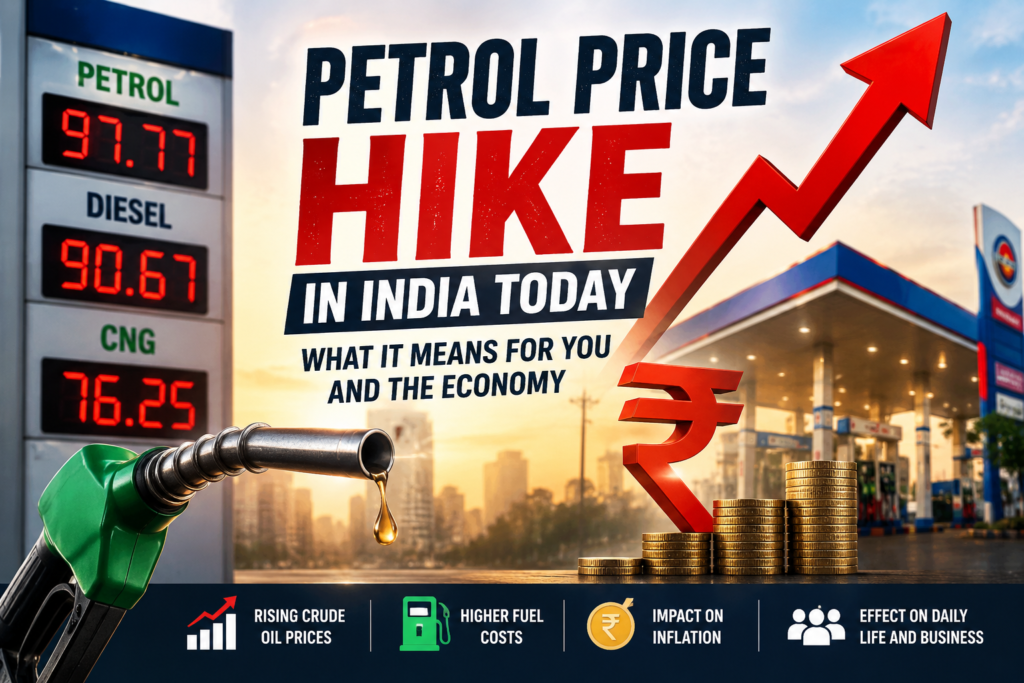
Fuel prices in India have once again become a major topic of discussion after the latest petrol price hike announced today. The increase in petrol and diesel prices has directly affected millions of Indians, especially middle-class families, transport businesses, and daily commuters. Rising fuel costs not only impact vehicle owners but also influence the prices of essential goods and services across the country.
As India heavily depends on crude oil imports, global market conditions play a huge role in determining domestic fuel prices. Every time international crude oil prices rise, Indian consumers eventually feel the pressure at petrol pumps. The latest increase has sparked concerns over inflation, transportation costs, and the overall economic burden on citizens.
Why Have Petrol Prices Increased in India?
There are several major reasons behind the latest petrol price hike in India. Understanding these factors helps explain why fuel prices continue to fluctuate frequently.
1. Rising Global Crude Oil Prices
India imports a large percentage of its crude oil from other countries. When international crude oil prices increase due to geopolitical tensions or supply disruptions, Indian oil companies raise domestic fuel prices accordingly.
Recent instability in the Middle East and concerns about global oil supply have pushed crude oil prices higher, leading to an increase in petrol and diesel rates across India.
2. High Taxes on Fuel
One of the biggest reasons petrol remains expensive in India is taxation. Both the central and state governments impose taxes on petrol and diesel. These taxes form a significant portion of the final retail price consumers pay.
Even when crude oil prices fall globally, fuel prices in India do not reduce significantly because taxes continue to remain high.
3. Rupee Weakness Against the Dollar
Crude oil is purchased internationally in US dollars. If the Indian rupee weakens against the dollar, importing oil becomes more expensive for India. This additional cost eventually affects domestic petrol prices.
Current Petrol Prices in Major Indian Cities
After today’s hike, petrol prices have increased across major cities. While rates differ slightly depending on state taxes, the rise has affected consumers nationwide.
Approximate Petrol Prices
- Delhi – Around ₹97 per litre
- Mumbai – Around ₹111 per litre
- Ahmedabad – Around ₹97 per litre
- Chennai – Around ₹103 per litre
- Kolkata – Around ₹106 per litre
These prices may continue changing depending on global crude oil trends and government policies.
Impact of Petrol Price Hike on Common People
The rise in petrol prices directly affects the daily lives of ordinary citizens. From transportation to household expenses, almost every sector feels the impact.
Increased Transportation Costs
Auto-rickshaw drivers, taxi operators, and logistics companies face higher operating costs when fuel prices rise. Public transport fares may also increase in some cities.
People who use personal vehicles daily for office travel or business purposes experience a major financial burden.
Rising Prices of Goods and Services
Fuel is essential for transporting goods across the country. When diesel and petrol prices rise, transportation costs increase for businesses. As a result, prices of vegetables, groceries, milk, and other essentials often rise as well.
This creates inflationary pressure on the economy and affects household budgets.
Pressure on Small Businesses
Small businesses that depend heavily on transportation or delivery services face profit challenges during fuel price hikes. Delivery companies, traders, and local vendors may increase service charges to compensate for rising fuel expenses.
Impact on the Indian Economy
Fuel prices have a strong connection with the overall economy. A continuous rise in petrol and diesel prices can slow economic growth if inflation increases too rapidly.
Inflation Concerns
Higher fuel costs contribute to inflation because transportation becomes more expensive for every industry. Rising inflation reduces consumer purchasing power and affects economic stability.
Increased Import Bill
India’s oil import bill increases significantly when global crude prices rise. This can impact the country’s trade balance and foreign exchange reserves.
Effect on Consumer Spending
When people spend more money on fuel, they often reduce spending on other goods and services. This affects retail businesses and slows economic activity.
Government’s Role in Fuel Price Control
The government can take certain measures to control petrol prices and reduce the burden on citizens.
Reducing Fuel Taxes
One possible solution is lowering excise duty and state taxes on petrol and diesel. This can provide immediate relief to consumers.
Promoting Electric Vehicles
India is actively promoting electric vehicles to reduce dependence on imported oil. Increased EV adoption could help reduce fuel demand in the long term.
Expanding Renewable Energy
The government is also investing in renewable energy sources like solar and wind power to reduce fossil fuel dependence.
How Citizens Can Manage Rising Fuel Costs
While fuel prices are beyond individual control, people can adopt smarter strategies to reduce expenses.
Useful Tips
- Use public transportation whenever possible
- Consider carpooling
- Maintain proper tyre pressure for better mileage
- Avoid unnecessary vehicle use
- Switch to electric or hybrid vehicles in the future
Small changes in driving habits can help save fuel and reduce monthly expenses.
Future Outlook for Petrol Prices in India
Experts believe petrol prices may remain volatile in the coming months due to international market uncertainty and geopolitical tensions. Much will depend on crude oil supply, global demand, and government tax policies.
If crude oil prices stabilize globally, Indian consumers may see some relief. However, continued tensions in oil-producing regions could keep fuel prices elevated.
Conclusion
The latest petrol price hike in India has once again highlighted the country’s dependence on global crude oil markets. Rising fuel prices impact not only vehicle owners but also the entire economy through inflation and increased transportation costs.
For common citizens, managing fuel expenses is becoming increasingly important. At the same time, long-term solutions like electric vehicles and renewable energy may help India reduce its dependence on expensive imported fuel in the future.
As fuel prices continue to remain a politically and economically sensitive issue, citizens across India will closely watch future government decisions and global oil market developments.
FAQs
Why did petrol prices increase in India today?
Petrol prices increased mainly due to rising global crude oil prices, currency fluctuations, and fuel taxation.
Which city has the highest petrol price in India?
Mumbai is usually among the cities with the highest petrol prices because of higher state taxes.
How do petrol price hikes affect inflation?
Higher fuel prices increase transportation costs, which raises the prices of goods and services across industries.
Can the government reduce petrol prices?
Yes, the government can reduce fuel taxes or provide subsidies to lower petrol prices temporarily.
Will petrol prices decrease soon?
Future petrol prices depend on global crude oil trends, geopolitical conditions, and government policies.