|
Getting your Trinity Audio player ready...
|
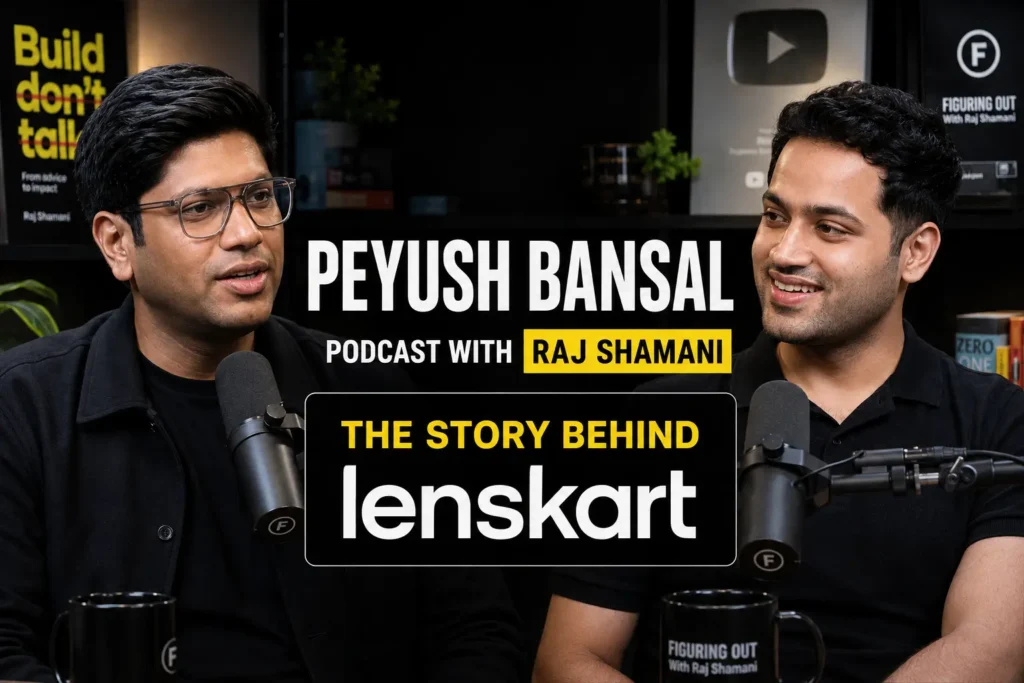
When Peyush Bansal got interviewed on Raj Shamani’s podcast, the chat turn out to be one of the most inspiring startup conversations for aspiring entrepreneurs and businessmen in India.
In contrast to a very technical business interview, this podcast was more about the real journey behind building Lenskart as one of India’s largest consumer brands.
The discussion explored:
- The origin of Lenskart
- Startup struggles
- Consumer behavior
- Leadership
- Scaling operations
- Brand-building
- Entrepreneurship mindset
- Business growth in India
What contributed to making the episode so interesting was the cool and common-sensical manner in which Peyush Bansal spoke about entrepreneurship.
Rather than celebrate startup culture, he was completely open about the struggles in creating a new company from nothing and the significance of addressing real challenges on a day-to-day basis.
I think most people identified with the podcast because it demonstrated that many experienced entrepreneurs experienced anxiety, setbacks, and doubt along the way.
The Journey of Peyush Bansal
Peyush Bansal, founder and CEO of Lenskart.
Prior to the launch of Lenskart, Peyush ventured into the corporate world, and also explored technology and internet businesses. But later, he realized that the Indian glasses market was inaccessible, unaffordable and non-convenient.
Back then, purchasing glasses remained an offline shopping activity, beyond the consumer’s control.
Peyush realized that the industry could be revolutionized through the use of technology, customer convenience, and improved retail experience.
And this idea was developed by Lenskart.
On the show Peyush added that a usual first step in becoming an entrepreneur is to look into real-life simple problems that most people don’t notice.
What was not discussed was how addressing some of these real consumer pain points ultimately snowballs into enormous business opportunities.
The Beginning of Lenskart
The most fascinating part of the podcast was the one about how Lenskart came into being.
Peyush noted that the business was not all about success from day one. Initially, gaining customers’ confidence was a big challenge, as they were not comfortable purchasing eyewear online.
Back then, a lot of people wondered if there were any way, shape, or form that glasses could even become a successful internet enterprise.
However, Peyush felt consumers’ mindset would change over time with more tech and more ease.
The company focused heavily on:
- Customer experience
- Product quality
- Technology integration
- Accessibility
- Affordable pricing
These gave Lenskart consumer confidence, and they gradually established trust with Indian customers.
The Podcast focused on the importance of patiently maintaining a long perspective while building consumer brands.
Understanding Consumer Behavior
The theme that seemed to run through the conversation the most was that of consumer understanding.
Peyush Bansal: Many successful businesses grow because they understand how their customers think, work and decide.
Of course, that’s not the only thing that Lenskart was doing; selling was just a part of the equation.
The discussion explored how modern consumers value:
- Convenience
- Speed
- Simplicity
- Trust
- Good service
This Customer First approach was then one of the major reasons for the growth of Lenskart.
The podcast then demonstrated how technology can revolutionise existing industries when it is used in conjunction with a deep customer knowledge.
Startup Challenges and Uncertainty
One other critical point raised in the podcast was startup pressure.
Peyush did not shy away from talking about the challenges of entrepreneurship all during the uncertain as to the success of the business.
While starting a company it means one is in decision making mode, where each decision has constraints and on a tight schedule, especially the time while scaling up.
The conversation explored how founders regularly deal with:
- Financial pressure
- Team management
- Market competition
- Operational challenges
- Customer expectations
- Self-doubt
This openness contributed to a discussion that entrepreneur and startup founder viewers of the program could easily relate to.
The podcast was able to display the emotional and mental stamina needed to survive in business rather than making entrepreneurship appear glitzy.
Leadership and Team Building
Leadership emerged as another topic around which the conversation centered.
A good product is not enough, says Peyush Bansal when asked how to scale a company, he pointed out.
As businesses grow, founders must learn:
- Team management
- Delegation
- Communication
- Decision-making
- Company culture building
He talked about how having high performing teams is now one of the biggest assets of fast growing organizations.
If the podcast covered this, it was also an indication that leadership is a matter of authority – lack of autonomy, leaders- as well as trust, vision, and being mentally and emotionally balanced.
This practically minded one was very felicitous for both entrepreneurs and professionals,
Building a Trusted Consumer Brand
The most significant success that was highlighted in the podcast was how Lenskart became a household consumer brand in India.
Peyush told us that trust is very precious in a business that is directly linked to customers.
Consumers only return to brands when they consistently deliver:
- Quality
- Reliability
- Good experience
- Convenience
Lenskart worked intensively on popular consumer satisfaction while simultaneously working towards further adaptability.
The conversation showed how modern brands succeed when they combine:
- Technology
- User experience
- Operational efficiency
- Brand trust
These customer-oriented thoughts were one of the reasons Lenskart experienced such exponential growth.
Entrepreneurship Requires Patience
A key takeaway from the podcast is that we need to learn patience!
In the kind of internet culture we have today, success stories about fast pace growth, overnight graphs and virality are often worshipped.
However, on the other hand PampG Ltd. Is a sustainable business and he says these builders run their companies on a steady as you go basis.
Entrepreneurship requires:
- Long-term thinking
- Consistency
- Problem-solving
- Emotional resilience
Discussions involved this a lot of time before the business grow. Quick increases of revenue are not happening frequently.
This serious attitude gave the audience something to identify with and increased the value of the podcast.
Raj Shamani’s Interview Style
One aspect that contributed to making this episode so highly engaging was Raj Shamani’s practical, conversational interview style.
Despite sucking us into a context of technical startup interview, Raj keeps on providing us with familiar business lessons and anecdotes.
The conversation flowed naturally across topics like:
- Startup growth
- Consumer psychology
- Leadership
- Entrepreneurship
- Team-building
- Personal experiences
Therefore, it was clear and simple to follow for all viewers who could be from non-business backgrounds.
One of the most powerful factors why his podcast platform keeps attracting young people is Raj’s skill of fostering easy startup chat.
Why Young Audiences Connected With This Podcast
The podcast found resonance and was particularly popular among the younger crowds. Concepts of entrepreneurship and startup culture are becoming more and more main stream in India.
Today, many young people dream about:
- Building startups
- Launching brands
- Becoming entrepreneurs
- Creating financial independence
But on social media you often only see the glamorous side of running a business.
This podcast provided a more realistic and more down to earth view.
It discussed:
- Business pressure
- Uncertainty
- Team challenges
- Long-term consistency
- Emotional resilience
That honesty drew the audience further into the discussion.
The Bigger Impact of the Podcast
LPC Notes for inter-level courses The Peyush Bansal podcast was anything but a convergence point of knowledge.
For many viewers, it became a lesson about:
- Patience
- Leadership
- Consumer understanding
- Business execution
- Long-term growth
This also encapsulated how quickly the startup scene in India is changing, with founders emerging as important new public personalities who will shape the next generation.
Podcasts like these are giving audiences the opportunity to understand the realities of entrepreneurship rather than justThe glam headlines.
Final Thoughts
Peyush Bansal and Raj Shamani’s discussion became one of the most actionable and motivational startup conversations in India’s creator ecosystem.
The episode delved into what it actually takes to build a trusted consumer brand that gets Lenskart beyond just the definition of success.
The discussion showed what it takes to build great business; Patience, customer obsession, discipline and strong leadership with a concentration on constant problem solving.
This realism is precisely what resonated so well with entrepreneurs, students, startup enthusiasts and young aspirants watching the podcast from across India.
1. Why did the Peyush Bansal podcast become popular?
The podcast got immensely popular because it genuinely cut through the fluff and explained entrepreneurship, the growth of startups, leadership and what actually goes into building Lenskart.
2. What was the main focus of the podcast?
During the discussion, they primarily discussed how to build Lenskart, consumer mindset, pressures of startup business, leadership and building a company for future.
3. What did Peyush Bansal say about entrepreneurship?
He explained that “entrepreneurship takes patience, emotional strength, customer understanding and long range.”
4. Why do startup founders relate to this podcast?
They can relate because the discussion is a real talk about the reality of uncertainty, stress, team-building, and the emotional component of building a business.
5. What is the biggest lesson from the podcast?
The biggest learning is that brands that win are built by building trust over time-by always focusing on the customer problem as the foundation.
Watch Full Video Here:
Peyush Bansal Podcast with Raj Shamani – The Story Behind Lenskart