|
Getting your Trinity Audio player ready...
|
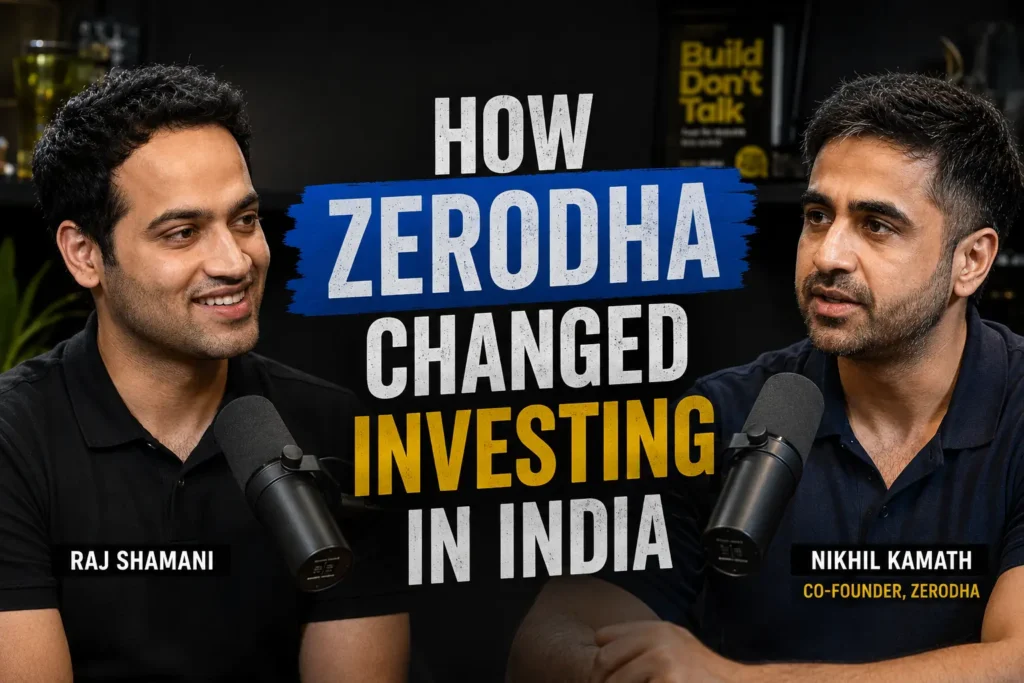
The moment Nikhil Kamath came on Raj Shamani’s podcast, the talk instantly started trending among entrepreneurs, investors, startup founders and the young Indian working population.
From everything I’ve seen on the web, this podcast was a calming, down-to-earth, and insightful stand from the millions of flashy finance talks out there. Instead of jumping to how to have “upward flow”, “noticing good money habits”, or achieve “easy success” overnight, the discussion delves into the mentality of how to get there.
In my opinion, it went on to become one of the most popular business podcasts as it covered subjects which modern Indian kids are quite interested in – investing, entrepreneurs, financial independence, pressure of startups, discipline in life and thinking for long term.
Nikhil Kamath, who co-founded Zerodha, is one of the few people in India who has truly revolutionized the way we invest in the stock market. Despite the fact that today digital investing platforms are used by millions, investing up until that time has been complex, costly and far-removed from the common man.
My podcast was about how Zerodha changed this system and became one of the country’s biggest startup success stories without taking a lot of outside investment.
Most interestingly, as the conversation progressed, the person-mind-set-the ball-behind Nikhil Kamath’s achievement became clearer.
The Unconventional Journey of Nikhil Kamath
Another reason why audiences today are more intrigued by Nik Kamath is because he is not your typical product of the general ‘rags to riches’ success story.
. While some of many entrepreneurs have walked the way of the elite academy, Kamath cut his education short at an early age. Delving into the practical realms of the world he sought to understand the ways of money, markets and business.
In fact, this early departure created very concrete differences in how his mind works.
In the podcast, Nikhil was candid about how learning hands-on while building a startup would always beat lessons learned from a book. He shared stories on how observation, curiosity and independent thinking are fundamental attributes of an entrepreneur.
His experiences are also examples of a trend that is happening around us today: where practicality, flexibility and the ability to solve one’s own problems are as important as formal education.
What made his story all the more inspiring was that Zerodha was not built on hype or a ‘growth at all costs’ approach – it was built slowly, steadily & in a sustainable manner.
That’s not a common thing to do in today’s startup scene.
How Zerodha Changed Investing in India
The podcast discussed the factors contributing towards the rise of Zerodha.
Prior to Zerodha, investing in stocks was considered intimidating and discouraging by many middle class people. Brokers used to charge high brokerage; the technology used was obsolete and the average joe was led to believe that investing is only for experts or rich people.
Zerodha put paid to that idea altogether.
Right from the start, Nikhil Kamath mentioned that the company kept it simple and presented the product in a way that was accessible to all. Rather than developing a complex financial services product, Malhotra developed a product that would make it easier for the masses to invest.
This shift was instrumental in over 20 million first-time investors entering the stock market.
In addition, this interaction pointed to the role that technology played in transforming the banking industry. The proliferation of digital channels meant that Indian youth by the age of 12 or 13, had begun to begin investing.
Today, Zerodha is regarded as one of India’s biggest-financial-technology success stories and can hardly be ignored for revolutionizing the investing culture.
A Different Perspective on Startup Culture
The one thing I thoroughly enjoyed during the podcast was Nikhil Kamath’s say on startups and fundings.
These days it’s impressive to raise tons of money, be worth billion dollars, and scale really, really fast. Today, Nikhil talked about how a profitable & sustainable business is way more important.
Started by a college dropout,Zerodha is one of the most successful bootstrapped startups in India without much reliance on venture capital funding. In the panel discussion, he explained how over funding can lead to unnecessary pressure and expectation.
It found a lot of support. The entrepreneurs watching the podcast were particularly receptive to this.
Rather than chasing hype, Nikhil underscored the significance of evolving businesses which focused on solving issues and creating long-lasting value.
That attitude is one of the strongest reasons for how Zerodha thrived while many over-funded startups lost significant financial ground.
Investing Is More About Psychology Than Intelligence
A further key factor that caused the rise in popularity of this podcast was the debate about the psychology of money.
Nikhil Kamath expressed that the real key to successful investing is not having a high IQ or knowledge about the market: the emotional discipline counts for more in many cases.
He touched on the common theme of how emotional tendencies, greed, and fear, impact investing behavior. When there is a market decline many investors panic, and on rises many investors become overconfident. This affects decisions over the long term.
The conversation brings investing to a bit more human and real, rather than a technical thing.
Predictability, discipline, patience, and consistency, rather than the model of stock markets providing a get rich quick scheme, were the main effect of the podcast.
This pretty practical approach explained to viewers why creating wealth over the long-term is emotionally taxing.
The Pressure Behind Entrepreneurship
The most honest part of the podcast was the discussion about the pressure entrepreneurs feel.
The startup world is all fluffy in the typical social media posts by showing off the flight travel, luxury lifestyle, positive success stories, growth stories etc. But Nikhil Kamath shared the pressure and the feeling of anxiety with every step taken by the entrepreneurs.
He described the emotional strain, daily pressure, responsibility and tough calls involved in building companies.
This sincerity really resonated with startup founders and budding entrepreneurs tuning in.
Instead of over-glamorizing the hustle all the time, the podcast provided a more honest depiction of entrepreneurship.
It also revealed that a prosperous business often involves sacrifice and mental stress that have to be endured for a sustained period of time.
Why Young Audiences Connected With This Episode
The podcast gained mainstream popularity among young Indians because of the present day business and financial situations it depicted.
Today’s generation is increasingly interested in:
- Financial freedom
- Investing
- Side income
- Entrepreneurship
- Personal branding
- Startup culture
But for many people, they still feel confused about where to start.
This discussion broke down a lot of my own blind spots in an accessible way.
Robert ZI is another example of how the interviewing skill of Raj helped make the episode interesting. By not making the interview dry and technical, he asked relevant questions in the language of a common man.
This kind of conversational tone made the podcast sound more natural instead of sounding overly academic.
The Importance of Long-Term Thinking
One of the most powerful lessons to come from the podcast was the role of long term thinking.
Nikhil Kamath kept stressing on the fact that it is all a matter of time to achieve sustainability in whatever sector. Be it on investment, entrepreneurship or about oneself, everything requires staying power.
This message was particularly striking to me because it is so antithetical to standard notions of Internet messaging culture, in which shallow instant-gratification assumption reigns.
The podcast was a reminder that real wealth and true success in business often happen in growth and progress stretching over years.
This vision made the discussion seem more real and believable.
Impact of the Podcast
The Nikhil Kamath podcast turned out to be so much more.
It became:
- A conversation about discipline
- A lesson on entrepreneurship
- A guide to smarter investing
- A modern startup culture conversation
- A reality check about wealth-building
The episode opened many younger people’s minds towards money and success.
The podcast was probably more effective in convincing its audiences to concentrate on having patience, learning and growing on the long term rather than buying the into popular shortcut mentality.
This is one of the biggest reasons why this conversation resonated so strongly with millions of people on the web.
Final Thoughts
In this way, one of the most life-changing business discussions ever in India happened between Nikhil Kamath and Raj Shamani.
And that has turned off your fires of Zerodha to the psychology of investing and the pressure of entrepreneurship. The podcast gave good learning for anyone seeking enterprises, finance, and selfgrowth.
The key is people leaving this presentation feeling that it is a confirmation that what is said is correct, but in the end it showed that true success is not created through hype and speedy shortcuts.
As India’s startup and investing boom gains further momentum, topics such as these will be relevant to the youth in years to come as they look toward building more intelligent financial lives.
1. Who is Nikhil Kamath?
Nikhil Kamath is the co-founder of Zerodha, and is one of the most prominent entrepreneurs and investors in India.
2. Why did the Nikhil Kamath podcast become viral?
Its virality is attributed to the fact that the podcast seriously dealt with investing, money psychology, entrepreneurship and startup culture in a very pragmatic way.
3. What is Zerodha?
Zerodha is India’s largest stock broker platform that democratized investing and made access to the stock market easier for 1.25 billion Indians.
4. What was the main message of the podcast?
The main themes of the podcast were (1) there is value in long term thinking, (2) being prudent from a financial perspective, (3) being emotionally disciplined, and (4) building a sustainable business.
5. Why do entrepreneurs relate to this podcast?
Entrepreneurs identified with the discussion because it authentically covered the topics of pressure, uncertainty, and true growth, business failures.
6. What can viewers learn from this podcast?
Everything you see here will allow viewers to take away knowledge about investing psychology, entrepreneurship, wealth management, patience, and the long-term path to sustainable success.
Watch Full Video Here:
Nikhil Kamath Podcast with Raj Shamani – How Zerodha Changed Investing In India
Nikhil Kamath Instagram Account
Nikhil Kamath Facebook Account