|
Getting your Trinity Audio player ready...
|
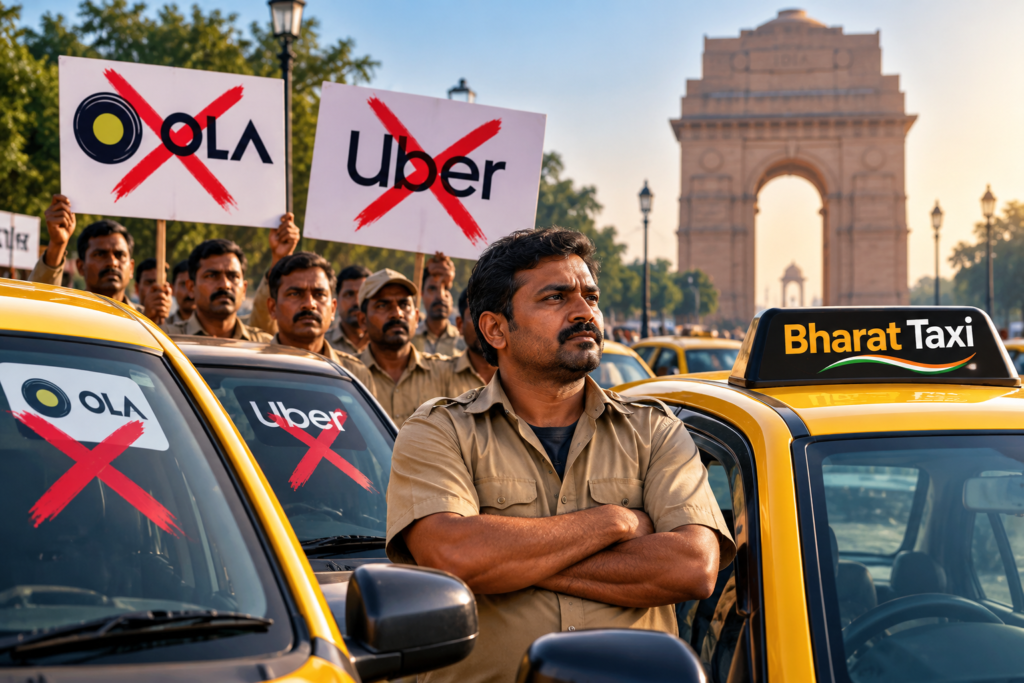
The platform became part of a major transport discussion in Ahmedabad in September 2026, when taxi and autorickshaw drivers began refusing bookings through established ride-hailing apps and encouraged passengers to use Bharat Taxi instead. The movement highlighted long-standing concerns about driver income, platform charges, fuel expenses and the way app-based transport services operate.
However, the shift has also created difficulties for passengers. Some commuters reported cancelled bookings, limited cab availability and higher fares on Bharat Taxi compared with other services. These concerns have raised an important question: can a driver-focused cooperative model provide better working conditions without making everyday travel more expensive?
To understand the growing interest in Bharat Taxi, it is important to look at how the platform works, why drivers are supporting it and what challenges it must overcome.
What Is Bharat Taxi?
Bharat Taxi is an Indian ride-hailing platform built around a cooperative business model. Unlike a conventional app-based taxi company, its stated approach is to give drivers an opportunity to participate in the cooperative rather than treating them only as service providers.
The platform operates through Sahakar Taxi Cooperative Limited and began offering services in February 2026. It has received support from national cooperative institutions, including the National Cooperative Development Corporation, IFFCO, NABARD and the Gujarat Cooperative Milk Marketing Federation, which operates the Amul brand.
Bharat Taxi allows users to book transport through a mobile application, including taxis and autorickshaws in supported locations. Its central promise is to reduce the burden of percentage-based commissions and provide drivers with a greater share of the money generated by their rides.
The idea is to combine digital convenience with cooperative ownership. Drivers, commonly referred to by the platform as Sarathis, can become members and participate in the cooperative structure, subject to its membership rules.
This model has attracted attention because driver earnings have been a recurring point of disagreement in India’s app-based transport sector.
Why Are Drivers Turning to Bharat Taxi?
The interest in Bharat Taxi is connected to several concerns raised by taxi and autorickshaw unions. The Ahmedabad movement brought these issues into the public spotlight.
1. Concerns About High Platform Commissions
One of the main complaints from drivers working with ride-hailing platforms is the amount deducted from their earnings.
A driver may complete several trips in a day but still struggle to make a reasonable income after accounting for platform charges, fuel, vehicle maintenance, insurance and other expenses. Drivers who pay vehicle loans or rent may face even greater pressure.
When a platform deducts a percentage of a ride’s value, the amount left for the driver can vary depending on the fare and the applicable fee structure. Drivers have therefore demanded greater transparency about passenger payments, driver payouts and other deductions.
Bharat Taxi promotes a zero-commission model. Instead of following the conventional percentage-based commission approach, it presents itself as a cooperative platform where drivers can retain more of their ride earnings.
This is one of the biggest reasons some drivers see Bharat Taxi as an alternative worth considering. However, drivers should check the current membership conditions and any applicable administrative or other charges rather than assuming that every ride is completely free of fees.
2. Low Fares and Uncertain Earnings
Drivers have also raised concerns about the fares offered through app-based transport services.
When a passenger sees a low fare, it may appear to be a good deal. However, drivers must cover the costs of completing the trip. These include fuel, vehicle servicing, tyres, insurance, permits and the time spent travelling to collect passengers.
A short ride can become less profitable if the driver has to travel a long distance to reach the pickup point or return without another booking. Waiting time and cancellations can also affect daily earnings.
Driver unions in Ahmedabad have called for fairer fare structures and greater attention to operating costs. The dispute is not simply about which app receives a booking. It is also about whether the amount paid for each trip allows drivers to earn a sustainable income.
Bharat Taxi’s cooperative approach aims to address this concern by changing how the platform and its drivers share the financial benefits of the service.
3. Rising Fuel and Vehicle Operating Costs
Fuel expenses are another important issue for drivers who depend on daily trips for their livelihood.
Autorickshaw and taxi drivers must regularly pay for CNG or other fuel, vehicle maintenance, repairs and insurance. They may also face loan repayments and other household expenses.
If fares remain low while operating costs rise, drivers can find it difficult to maintain their vehicles and support their families.
During the September 2026 protests in Ahmedabad, driver organisations raised concerns about CNG costs alongside platform commissions and fare structures. These issues contributed to the broader demand for changes in app-based transport services.
A cooperative platform may offer a different financial arrangement, but it cannot eliminate fuel costs or vehicle expenses. Its long-term success will depend on whether drivers can earn enough from the trips they complete.
4. Greater Control Through a Cooperative Model
Traditional app-based platforms generally manage their services through company-controlled systems, including booking allocation, pricing arrangements and platform policies.
Bharat Taxi promotes a different approach by allowing eligible drivers to become cooperative members. The model is intended to give drivers a stake in the organisation and a role in its broader economic structure.
According to the platform’s stated model, cooperative participation and potential profit-sharing are important parts of its long-term approach.
For drivers, this can be attractive because it offers the possibility of participating in the business rather than depending entirely on a platform’s booking system.
However, cooperative membership should not be confused with an automatic or guaranteed profit. Benefits depend on the cooperative’s rules, financial performance and applicable membership conditions.
5. Demands for Fairer Regulation
The Ahmedabad movement also involved wider concerns about how app-based transport services are regulated.
Driver unions raised questions about minimum fares, vehicle permits, driver credentials, platform deductions and grievance redressal. They also objected to the use of private vehicles for commercial passenger services, particularly where they believed rules were not being properly enforced.
These concerns show that the dispute is not only about choosing a different application. Drivers are also seeking a more predictable system in which fares, operating rules and responsibilities are clearly defined.
In late September 2026, Gujarat transport authorities held discussions with driver representatives following the disruption. Subsequent reporting indicated that the state was considering a policy for app-based transport services, including minimum fare rules. The final effect of any policy will depend on the measures formally implemented. Source: Ahmedabad Mirror, October 2026
The Ahmedabad Driver Boycott: What Happened?
Ahmedabad became a major focus of the Bharat Taxi discussion in September 2026.
Taxi and autorickshaw drivers began a boycott of bookings through established ride-hailing platforms on September 21. Driver groups encouraged passengers to use Bharat Taxi instead, arguing that drivers needed a fairer arrangement for their work.
The boycott followed an earlier four-day strike, held from September 7 to September 10, during which driver unions raised concerns about aggregator fares, commissions, fuel expenses and the operation of certain bike-taxi services.
The September 21 movement caused disruption for commuters. News reports described passengers experiencing cancellations and difficulty finding rides. Some passengers also reported that drivers accepted bookings through one app and later asked them to cancel and book through Bharat Taxi.
The situation brought two different interests into conflict. Drivers wanted better earnings and more favourable working conditions, while passengers wanted reliable bookings, reasonable fares and the freedom to choose their preferred service.
The Gujarat transport authorities subsequently held discussions with driver representatives. By the end of September, reports indicated that the unions had agreed to suspend their agitation after receiving assurances that their demands would be considered.
The episode demonstrated how disputes over platform economics can affect an entire city’s transport network. It also showed that promoting an alternative app is not enough by itself: the alternative must have sufficient drivers, reliable availability and competitive fares to serve commuters effectively. Sources: News Gujarat and The Times of India, September 2026
| Date / Period | Event | Key Details |
|---|---|---|
| September 7–10, 2026 | Earlier driver strike | Several driver unions protested over low driver earnings, CNG expenses, platform charges and bike-taxi regulations. Their concerns extended across multiple ride-hailing platforms, including Bharat Taxi. |
| September 21, 2026 | Boycott and shift towards Bharat Taxi | Ahmedabad taxi and autorickshaw unions began refusing rides through Ola, Uber and Rapido and encouraged drivers and passengers to switch to Bharat Taxi. |
| After September 21, 2026 | Passenger disruption | Local reports described booking difficulties, cancellations and drivers asking passengers to rebook through Bharat Taxi. Some commuters also complained that Bharat Taxi fares were higher than comparable rides on other platforms. |
How Does Bharat Taxi’s Zero-Commission Model Work?
Bharat Taxi’s most prominent selling point is its stated zero-commission approach.
In a conventional commission-based model, a platform deducts a portion of the ride payment as its fee. Under Bharat Taxi’s advertised approach, drivers are not charged a percentage-based commission in the same way.
The cooperative structure is intended to give drivers a greater share of the income generated by their trips. Eligible members may also participate in the cooperative and its potential financial benefits according to the applicable rules.
However, zero commission does not automatically mean zero charges of every kind. Reporting on Bharat Taxi has described administrative fees for some bookings and different arrangements for members and non-members. Drivers should therefore review the latest fee schedule, membership terms and payment rules before joining.
The distinction matters because a platform must still pay for technology, customer support, payment systems, operations and other services. Its business model must cover those costs while maintaining fair conditions for drivers.
For Bharat Taxi, the challenge is to make its cooperative model financially sustainable while delivering a service that drivers and passengers find useful.
Is Bharat Taxi Cheaper for Passengers?
Not necessarily.
Although Bharat Taxi aims to improve the financial position of drivers, passengers have reported that its fares can be higher than comparable rides on other apps.
During the Ahmedabad boycott, some commuters complained about higher prices and limited availability. News reports described passengers finding Bharat Taxi fares more expensive for similar journeys, although prices can vary by route, vehicle type, time and availability.
This creates an important trade-off. A platform may be attractive to drivers because it reduces percentage-based commissions, but its fares must still work for customers.
Passengers generally compare several factors before booking:
- The total fare displayed before the ride
- The time required for a driver to arrive
- The availability of the preferred vehicle
- The reliability of the booking
- Customer support and the process for resolving complaints
If Bharat Taxi consistently offers higher fares without a clear benefit in availability or service, some customers may choose another option. On the other hand, if it can provide reliable rides, transparent pricing and better driver participation, it may build a loyal customer base.
Passengers should compare the final fare for the same route and vehicle category before confirming a booking.
What Are the Main Challenges Facing Bharat Taxi?
Bharat Taxi has a distinctive model, but it still faces several challenges as it attempts to grow.
Building a Large Driver Network
A ride-hailing app needs enough drivers in the right locations. If passengers open the app and cannot find a vehicle, they may return to services they already know.
Driver availability is especially important during office hours, late-night travel, weekends and periods of high demand.
Keeping Fares Competitive
Bharat Taxi must balance driver earnings with passenger affordability. Better earnings for drivers are important, but fares that are consistently much higher than competing options could discourage customers from using the platform regularly.
Transparent pricing and an efficient operating model will be essential.
Maintaining Passenger Choice
The Ahmedabad episode also highlighted concerns about customers being pressured to switch apps. Passengers should be able to choose the service that suits their needs and budget.
A driver can decide which platform to use, subject to applicable rules and agreements, but passengers should not be coerced into cancelling an existing booking or paying a higher fare on another platform.
Building Trust and Customer Support
Customers need confidence that bookings will be honoured, prices will be explained clearly and complaints will receive a response.
A growing platform must establish reliable cancellation policies, effective dispute resolution and consistent service standards. These factors can be just as important as the cooperative model when customers decide which app to use.
Expanding Beyond Early Markets
Bharat Taxi also needs to build a stronger presence across different cities and local markets. Each city has its own transport patterns, fare expectations and driver requirements.
Successful expansion will require enough drivers, local awareness, dependable technology and a pricing structure suited to the area.
What Does Bharat Taxi Mean for India’s Taxi Industry?
Bharat Taxi introduces an alternative way to organise app-based transport. Its cooperative approach places greater emphasis on driver participation and reducing percentage-based commissions.
If the model works at scale, it could encourage more discussion about how ride-hailing platforms calculate fares, distribute earnings and involve drivers in business decisions.
It could also push the wider industry to pay closer attention to driver concerns and the transparency of payment structures.
However, the cooperative model alone cannot guarantee success. Bharat Taxi must demonstrate that it can provide reliable service, affordable fares and effective customer support while delivering meaningful benefits to drivers.
The Ahmedabad dispute also suggests that government policy will play an important role. Clearer fare rules, proper enforcement of permits and accessible grievance mechanisms could help reduce conflict between drivers, platforms and passengers.
Ultimately, competition in the taxi industry should give both drivers and passengers meaningful choices. Drivers need a sustainable income, while customers need a dependable service at a reasonable price.
FAQs
What is Bharat Taxi in India?
Bharat Taxi is an Indian ride-hailing platform operated through a cooperative model. It allows users to book transport in supported locations and aims to give drivers a greater role in the business.
Why are drivers choosing Bharat Taxi?
Some drivers are attracted by its zero-commission approach, cooperative structure and the possibility of greater participation in the platform. Concerns about commissions, low fares and rising operating costs have also contributed to the interest.
Why did taxi drivers boycott other ride-hailing apps in Ahmedabad?
In September 2026, driver unions in Ahmedabad protested over issues including fare structures, platform charges, fuel costs and transport regulations. From September 21, participating drivers encouraged passengers to use Bharat Taxi, leading to booking disruptions and complaints from commuters.
Is Bharat Taxi completely commission-free?
Bharat Taxi advertises a zero-commission model. However, reports have described certain administrative fees and different arrangements for members and non-members. Drivers should check the current terms rather than assume that no charges apply.
Is Bharat Taxi cheaper than other taxi apps?
Not always. Passenger reports during the Ahmedabad dispute described cases in which Bharat Taxi fares were higher than comparable rides elsewhere. Prices depend on the route, vehicle category, availability and current fare structure.
Can Bharat Taxi replace established ride-hailing services?
It is too early to conclude that Bharat Taxi will replace established services. Its future will depend on driver availability, competitive pricing, service quality, customer trust and its ability to expand sustainably.
Conclusion
Bharat Taxi is attracting attention because it offers a different approach to India’s app-based transport industry. Its cooperative model and zero-commission promise appeal to drivers who want better earnings and a greater role in the business.
The Ahmedabad boycott in September 2026 brought these concerns into sharper focus, while also revealing the difficulties passengers face when bookings are disrupted or fares become less affordable.
For Bharat Taxi to grow successfully, it must deliver on both sides of the market. Drivers need fair and sustainable earnings, and passengers need reasonable fares, reliable availability and the freedom to choose their preferred service.
Its long-term success will depend not simply on attracting drivers from other platforms, but on proving that a cooperative ride-hailing model can work reliably and affordably across India.