|
Getting your Trinity Audio player ready...
|
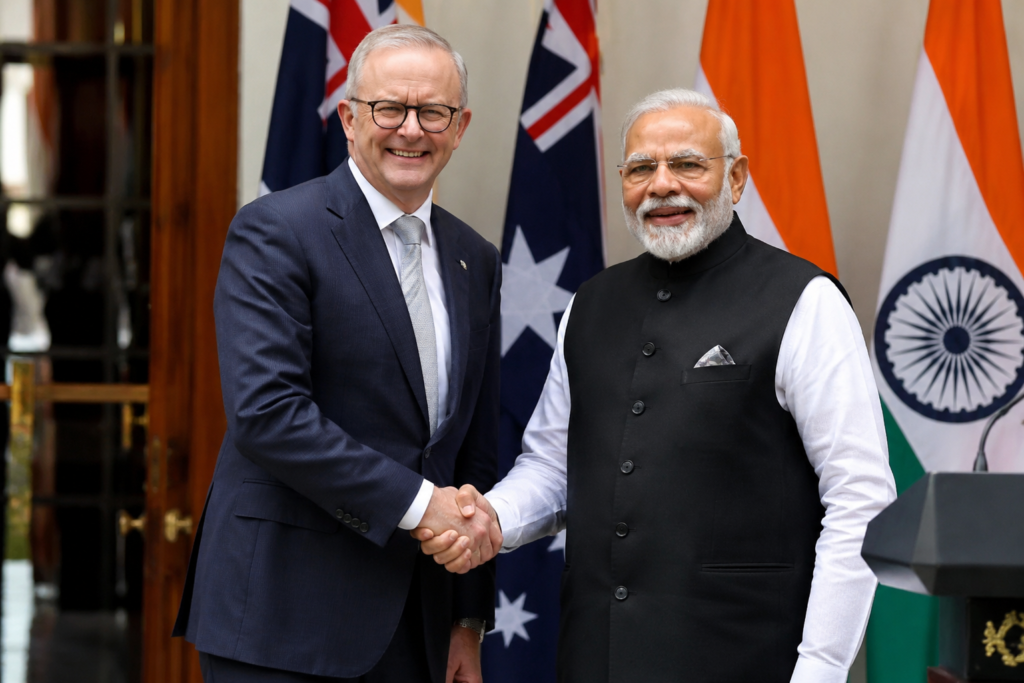
In a rapidly changing global economy, international partnerships have become more important than ever. Nations are increasingly seeking reliable allies for trade, technology, energy security, supply chain resilience, and strategic cooperation. Against this backdrop, Prime Minister Narendra Modi’s latest visit to Australia has emerged as one of the most significant diplomatic and economic developments for India in 2026.
The visit comes at a time when both countries are looking to deepen their relationship beyond traditional trade and diplomacy. From clean energy investments and critical minerals to technology partnerships and defense cooperation, the outcomes of the visit are expected to influence India’s economic growth trajectory for years to come.
As global businesses continue to diversify supply chains and governments seek alternatives to overdependence on a few major markets, the India-Australia partnership is gaining strategic importance. The latest discussions between the two nations have highlighted opportunities worth billions of dollars while strengthening cooperation across multiple sectors that are crucial for future economic development.
For India, the visit is not merely about diplomacy. It represents a significant opportunity to attract investment, secure critical resources, expand exports, create jobs, and strengthen its position as one of the world’s fastest-growing major economies.
Why the India-Australia Relationship Matters More Than Ever
Over the last decade, relations between India and Australia have evolved dramatically. What was once a relationship primarily centered around education and trade has transformed into a comprehensive strategic partnership.
Several factors are driving this transformation.
First, both nations share a common interest in maintaining stability in the Indo-Pacific region. Second, economic diversification has become a priority as global supply chains continue to face disruptions. Third, emerging sectors such as clean energy, artificial intelligence, cybersecurity, critical minerals, and advanced manufacturing require deeper international cooperation.
Australia views India as one of the world’s most important future markets. With a population exceeding 1.4 billion and a rapidly growing middle class, India represents enormous opportunities for Australian businesses and investors.
At the same time, India sees Australia as a reliable partner for energy resources, critical minerals, education, innovation, and technology collaboration.
The latest visit by Prime Minister Modi has reinforced these mutual interests while creating new pathways for economic cooperation.
Key Highlights from PM Modi’s Australia Visit
The visit focused heavily on strengthening economic ties, attracting investments, and expanding cooperation in sectors that will define future growth.
Among the major areas discussed were:
- Clean energy investments
- Critical minerals partnerships
- Technology collaboration
- Artificial intelligence
- Semiconductor development
- Infrastructure investments
- Defense cooperation
- Startup ecosystem partnerships
- Education and skill development
- Supply chain security
While political meetings and diplomatic discussions received significant media attention, business leaders and investors were particularly interested in the economic announcements emerging from the visit.
These developments have the potential to influence industries ranging from electric vehicles and renewable energy to manufacturing and digital technology.
Major Investment Opportunities Emerging from the Visit
One of the biggest outcomes of the Australia visit is the renewed focus on investment partnerships.
Australian investors are increasingly looking at India as a long-term growth destination. India’s strong economic performance, expanding digital economy, infrastructure development, and manufacturing initiatives have attracted global attention.
Several investment discussions have focused on sectors including:
Renewable Energy
India has ambitious renewable energy targets and requires substantial investment to achieve them.
Australian companies have shown increasing interest in supporting:
- Solar power projects
- Wind energy developments
- Battery storage systems
- Green hydrogen initiatives
- Clean energy infrastructure
These investments could help India accelerate its transition toward sustainable energy while reducing dependence on imported fossil fuels.
Infrastructure Development
India’s infrastructure sector remains one of the largest investment opportunities globally.
Australian institutional investors have shown growing interest in:
- Roads and highways
- Airports
- Logistics hubs
- Urban development projects
- Smart city initiatives
- Rail networks
Such investments not only improve infrastructure quality but also generate employment and economic activity.
Technology and Innovation
Technology emerged as a major pillar of discussions during the visit.
Areas receiving significant attention include:
- Artificial intelligence
- Cybersecurity
- Cloud computing
- Fintech
- Digital governance
- Research and development
Technology collaboration can strengthen India’s innovation ecosystem while providing Australian firms access to one of the world’s largest digital markets.
Critical Minerals: A Strategic Priority for India
Perhaps one of the most important aspects of the visit relates to critical minerals.
Many people may not realize that the future of electric vehicles, batteries, renewable energy systems, and advanced electronics depends heavily on minerals such as:
- Lithium
- Cobalt
- Nickel
- Rare earth elements
Australia possesses some of the world’s largest reserves of these resources.
India, meanwhile, is rapidly expanding its electric vehicle industry and renewable energy infrastructure.
This creates a natural partnership.
By strengthening access to Australian critical minerals, India can reduce supply chain vulnerabilities while supporting domestic manufacturing initiatives.
This partnership could prove particularly valuable as global competition for critical resources continues to intensify.
Clean Energy Cooperation Takes Center Stage
Energy security remains one of India’s most important long-term challenges.
As the country continues to grow, energy demand is expected to increase significantly.
Australia and India have identified clean energy cooperation as a key area for collaboration.
Green hydrogen has emerged as one of the most promising opportunities.
Both nations are investing heavily in hydrogen technologies that could eventually transform industrial production, transportation, and energy systems.
The visit highlighted opportunities for joint research, investment, and technology transfer that could accelerate development in this emerging sector.
Clean energy cooperation also aligns with global climate objectives while creating new economic opportunities.
What This Means for India’s Manufacturing Sector
India’s manufacturing ambitions have expanded significantly under initiatives designed to strengthen domestic production and reduce import dependence.
Australia’s resources, technology expertise, and investment capabilities can support these objectives.
Industries likely to benefit include:
Electric Vehicles
Access to critical minerals can support battery production and EV manufacturing.
Electronics
Semiconductor and advanced electronics initiatives may gain momentum through stronger international partnerships.
Renewable Energy Equipment
Solar panels, battery systems, and clean energy components could see increased investment and production capacity.
Industrial Machinery
Advanced manufacturing collaboration may improve productivity and competitiveness.
For manufacturers, the visit creates opportunities that extend beyond simple trade agreements.
The Growing Role of Artificial Intelligence and Technology
Artificial intelligence has become one of the defining technologies of the modern economy.
Governments worldwide are competing to establish leadership positions in AI development and implementation.
India and Australia have both recognized the importance of technological cooperation.
Potential areas of collaboration include:
- AI research
- Machine learning applications
- Digital transformation
- Cybersecurity solutions
- Data analytics
- Emerging technology regulation
These partnerships can help businesses in both countries remain competitive in an increasingly technology-driven world.
For Indian startups, stronger international collaboration can also create new opportunities for funding, innovation, and market expansion.
Opportunities for Indian Startups
India’s startup ecosystem has become one of the largest globally.
Australian investors are increasingly exploring opportunities within Indian technology and innovation sectors.
Key areas attracting interest include:
- Artificial intelligence
- Fintech
- Health technology
- Agritech
- Climate technology
- SaaS platforms
- Deep technology ventures
Cross-border investment and collaboration can help startups access capital, expertise, and international markets.
For entrepreneurs, the visit sends a strong signal that India remains an attractive destination for global investment.
Education and Skill Development Partnerships
Education continues to be one of the strongest pillars of India-Australia relations.
Thousands of Indian students pursue higher education in Australia every year.
The latest discussions focused on expanding collaboration through:
- Research partnerships
- Student exchange programs
- Skill development initiatives
- Professional training programs
- University collaborations
As industries evolve, workforce development becomes increasingly important.
These partnerships can help prepare future talent for emerging sectors such as AI, renewable energy, advanced manufacturing, and digital technologies.
Strengthening Supply Chain Resilience
The COVID-19 pandemic and subsequent global disruptions exposed vulnerabilities in international supply chains.
Governments and businesses are now prioritizing diversification.
India and Australia are working together to create more resilient supply chains in sectors including:
- Critical minerals
- Pharmaceuticals
- Technology components
- Manufacturing inputs
- Energy resources
A stronger supply chain partnership benefits both countries by reducing risks and improving economic stability.
Impact on Employment and Economic Growth
One of the most important questions for ordinary citizens is how these developments will affect jobs and economic growth.
Foreign investment often creates positive ripple effects throughout the economy.
Potential benefits include:
Direct Employment
New projects and investments generate jobs across multiple sectors.
Indirect Employment
Supply chains, logistics, services, and supporting industries also benefit.
Technology Transfer
Advanced expertise and innovation can improve productivity and competitiveness.
Export Growth
Expanded trade opportunities support business expansion and employment.
While the full impact will take years to materialize, the foundations established during the visit could contribute significantly to India’s long-term economic development.
Strategic Importance Beyond Economics
Although economic outcomes are a major focus, the visit also carries broader strategic significance.
The Indo-Pacific region is becoming increasingly important in global geopolitics.
India and Australia share interests in:
- Maritime security
- Regional stability
- Open trade routes
- Supply chain resilience
- Technology security
Stronger cooperation enhances both economic and strategic partnerships.
This alignment is expected to become even more important as global competition intensifies.
Challenges That Remain
Despite the positive momentum, challenges still exist.
These include:
- Regulatory complexities
- Trade barriers
- Project implementation delays
- Global economic uncertainty
- Competitive pressures
Successful execution will require continued cooperation between governments, businesses, and investors.
Announcements alone do not guarantee outcomes.
The real measure of success will be the implementation of agreements and the delivery of tangible economic benefits.
What the Future Looks Like
The future of India-Australia relations appears increasingly promising.
Several trends support further growth:
- Rising bilateral trade
- Expanding investment flows
- Technology collaboration
- Clean energy partnerships
- Startup ecosystem connections
- Strategic cooperation
As both economies continue evolving, opportunities for deeper engagement are likely to increase.
Many analysts believe that the relationship could become one of the most significant partnerships in the Indo-Pacific region during the next decade.
Conclusion
Prime Minister Narendra Modi’s Australia visit represents far more than a diplomatic engagement. It marks another step in the transformation of India-Australia relations into a comprehensive economic and strategic partnership.
From critical minerals and clean energy to artificial intelligence and infrastructure development, the visit has created opportunities that could influence India’s growth story for years to come.
For businesses, investors, startups, and policymakers, the outcomes of the visit offer a glimpse into the future of international cooperation in an increasingly interconnected world. While challenges remain, the potential benefits are substantial.
If successfully implemented, the agreements, investments, and partnerships emerging from this visit could contribute to stronger economic growth, greater innovation, enhanced energy security, and new opportunities for millions of Indians.
FAQs
Why is PM Modi’s Australia visit important for India?
The visit strengthens trade, investment, technology, clean energy, and strategic cooperation between India and Australia.
Which sectors are expected to benefit the most?
Renewable energy, critical minerals, infrastructure, technology, manufacturing, startups, and education are among the biggest beneficiaries.
What are critical minerals and why are they important?
Critical minerals such as lithium, cobalt, and rare earth elements are essential for electric vehicles, batteries, renewable energy systems, and advanced technologies.
How can Australian investments help India?
Australian investments can support infrastructure development, clean energy projects, technology innovation, manufacturing growth, and job creation.
What does the future hold for India-Australia relations?
Analysts expect stronger trade, increased investment, greater technology collaboration, and deeper strategic cooperation over the coming years.